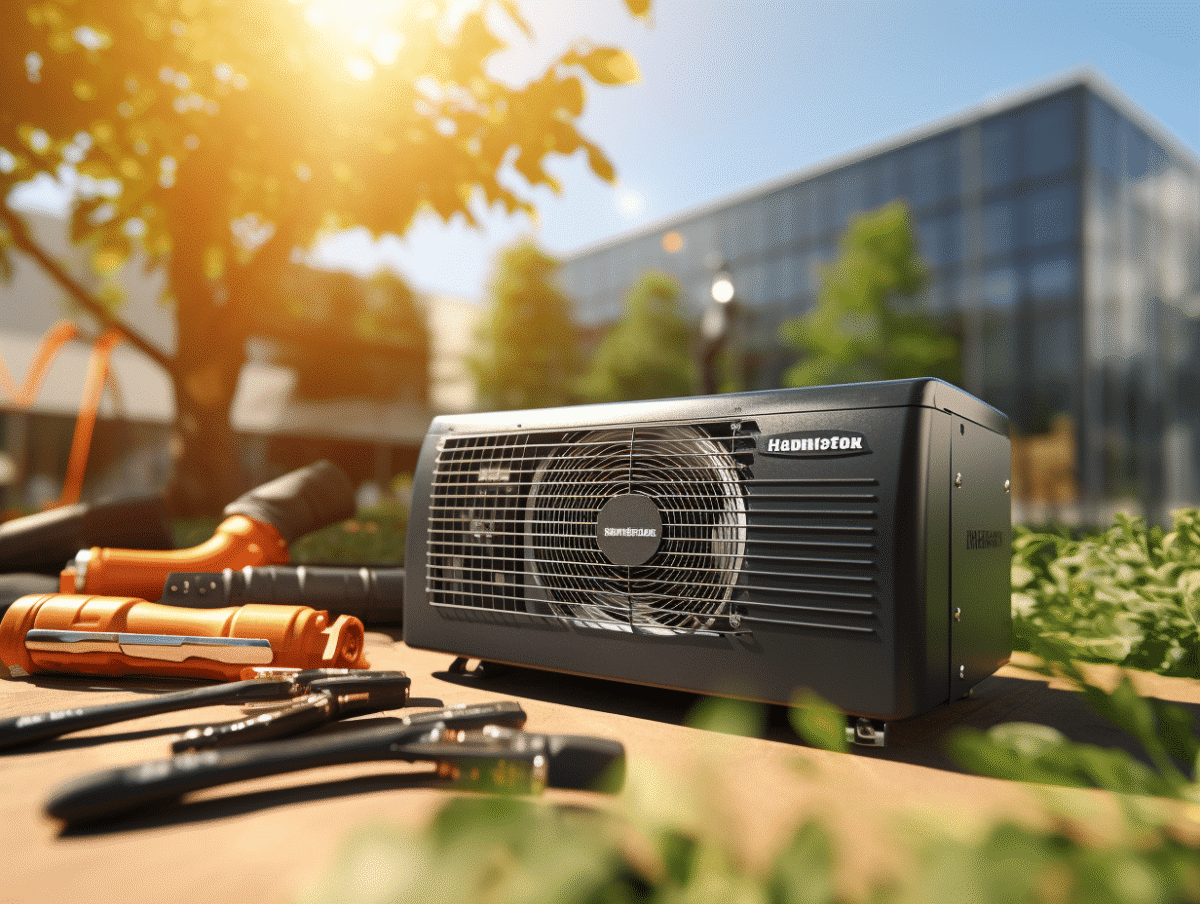
When considering the installation of a heat pump, a precise understanding of the required amperage is fundamental. This element determines the capacity of the electrical circuit to supply the equipment without the risk of overload. The necessary amperage depends on several factors, including the power of the pump, the energy efficiency of the device, and the distance between the power source and the unit. Industry professionals must perform meticulous calculations to ensure that the installation complies with safety standards and offers optimal performance, thus avoiding the inconveniences of a breakdown or costly maintenance.
Calculating Amperage for an Efficient Heat Pump Installation
Understanding the necessary amperage for the installation of a heat pump involves methodically analyzing the power of the equipment, particularly an air/water heat pump, based on the area of the house to be heated. This power, expressed in kilowatts, will determine the minimum amperage required for the proper functioning of the device. For an adequate installation, accurately study the average consumption of the equipment and take into account the energy loss coefficient of the dwelling, in order to estimate the electrical load that will be imposed on the distribution system.
The electrical connection of the heat pump must be made with appropriate electrical lines, circuit breakers, and differential switches. The differential circuit breaker, in particular, is an essential component of the electrical connection. It provides protection against potential leakage currents and the risk of electrocution. Depending on the power of the pump and the electrical consumption, the choice between a type C or D circuit breaker is fundamental; the former is suitable for standard starts, while the latter is recommended for equipment with high starting currents.
For professionals, the question of how to plan the connection and power line for an air/water heat pump is resolved by creating an electrical installation plan that complies with the NF C 15-100 standard. This plan must include a reliable grounding system and, if necessary, the addition of a sub-distribution board to complement the main electrical panel. Ensure that the installation is carried out by a certified Qualifelec professional, thus guaranteeing compliance with current standards, including EN 61000-3-3 and EN 61000-3-2 related to starting currents and auxiliary resistances.
Determining Criteria for Choosing Amperage in Heat Pump Installation
The design of an electrical installation plan is fundamental for any heat pump setup. This plan, which must be scrupulously established, takes into account the specifics of the house and ensures that all components are capable of supporting the electrical load induced by the pump. The power of the domestic electrical installation, particularly the capacity of the electric meter, must be assessed to reliably support the consumption of the pump.
A electrical panel compliant with the NF C 15-100 standard is the cornerstone of a secure installation. It necessarily includes an effective grounding system, essential for preventing electrical accident risks. In some cases, the addition of a sub-distribution board may be necessary to adequately distribute the electrical load and avoid any overload on the main electrical panel.
The Qualifelec certification of professionals ensures the quality and compliance of the electrical installation. This certification guarantees adherence to current standards, including EN 61000-3-3 and EN 61000-3-2, which govern starting currents and auxiliary resistances. These standards aim to optimize the performance of the installation and reduce electrical disturbances that may arise from a heat pump.
Don’t forget the financial aids available for installations carried out by a RGE QualiPAC professional. These aids can significantly reduce the initial investment and encourage the adoption of more ecological and economical heating systems. Be sure to carefully review the eligibility conditions to benefit from these financial supports when transitioning to a heat pump.