A hobby you stick with for six months is worth more than a passion you abandon after three weeks. Choosing a rewarding activity depends less on its initial appeal than on how well it fits your real-life constraints: available time, budget, access to a place to practice, and energy levels when you take part.
A longitudinal study harmonizing data from five surveys across sixteen countries linked regular hobby participation to fewer depressive symptoms and greater life satisfaction among people aged 65 and over. A hobby works as a regular practice, not as a one-off dose of well-being.
What makes a hobby practical in everyday life
Most guides list appealing activities without first asking whether they are feasible over the long term. A community survey of older adults in Chengdu found that, among those with a clear preference for artistic activities, barriers to access and ability outweighed a lack of motivation. In other words, people are often interested, but location, cost, or scheduling gets in the way.
Before choosing an activity, we recommend assessing each option against four practical factors:
- The time you can realistically set aside each week, including travel and equipment preparation—not just the session itself.
- Ongoing costs (membership fees, supplies, travel), separate from the upfront cost often highlighted in activity listings.
- How close the activity is to home, or whether you can do it at home—this affects consistency far more than motivation.
- The physical and cognitive energy it requires, which can vary depending on the time of year or your workload.
A hobby that meets all four criteria is likely to last. One that meets only two will probably be dropped as soon as your routine changes.
To explore activity ideas by category, hobbies on I Announce make it easy to compare the options available in your area.

Creative hobbies beyond artistic expression
Limiting creativity to painting, drawing, or writing overlooks a wide range of amateur pursuits. French data published in France, portrait social 2022 show that amateur hobbies extend beyond the artistic activities most commonly highlighted. DIY, repair, and decorating all draw on creative skills that can be developed through collaboration, mentoring, or independent practice.
Restoring a piece of furniture, repairing an appliance, or making over a balcony all involve problem-solving, improvisation, and planning. They also produce a tangible result, which strengthens a sense of competence.
Reading for pleasure and cognitive stimulation
A review published in Psychological Medicine brings together research linking reading with aspects such as well-being, mental health, and cognitive performance. It also highlights longitudinal studies on cognitive decline in older adults. Reading for pleasure is a creative hobby in its own right, even if it does not produce an object.
Reading fiction engages the imagination, builds empathy, and requires neither expensive equipment nor travel. It is one of the few hobbies you can enjoy whatever your energy level.
Choosing an activity to match your energy level
A classic pitfall is signing up for a demanding activity on an evening when motivation is high, then stopping as soon as fatigue sets in. A sustainable hobby adapts to changing energy levels rather than demanding constant commitment.
The most reliable approach is to have two or three activities that require different levels of effort. Choose a physical activity (walking, swimming, team sports) for days when you have energy to spare. Then have a hands-on or intellectual activity (cooking, gardening, reading, music) for times when you need to recharge.
Combining physical and low-key activities
This combination is not just a matter of convenient scheduling. It helps avoid the all-or-nothing pattern of “I do it / I don’t do it anymore” that leads people to give up. A gardener who reads on rainy evenings can keep up a regular hobby routine without overtaxing their body or schedule.
Outdoor sports, nature walks, and cycling offer an added benefit: contact with the natural environment, which several studies have linked to lower perceived stress.

Budget and equipment: avoid investing too soon
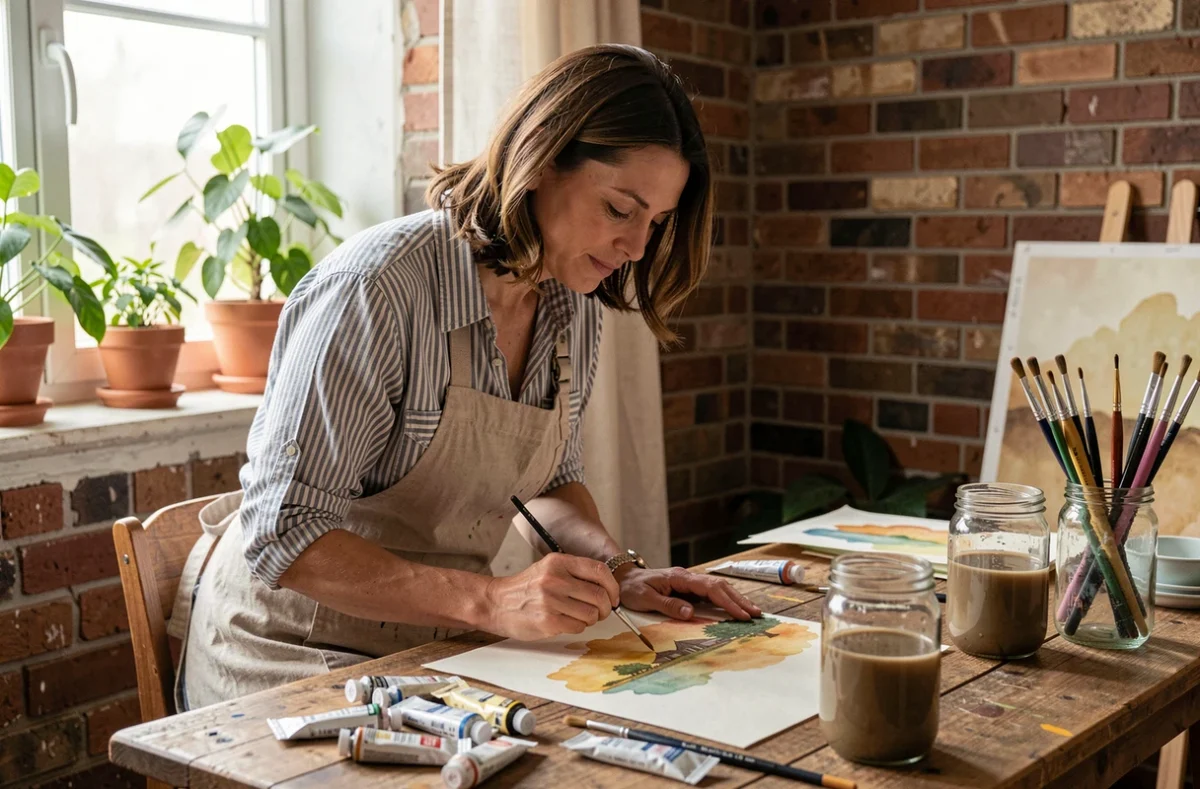
Buying equipment before you know whether you enjoy an activity is the leading cause of wasted spending on creative hobbies. A new guitar left in the closet after two months, an untouched watercolor set, an annual subscription used three times—the pattern repeats itself.
A sensible rule is to start with borrowed, secondhand, or basic equipment. Three months of regular practice with basic gear is enough to confirm your commitment. Invest later, based on how you actually use it.
Free or low-cost hobbies
Several rewarding activities have no ongoing costs: walking, reading at the library, writing, drawing with a simple notebook, and volunteering with a community organization. Others are still inexpensive: balcony gardening, creative cooking with everyday ingredients, and group board games.
Cost does not predict the value of a hobby. A free activity you do every week is more enriching than an expensive workshop you attend once a year.
Choosing a sustainable hobby means matching your interests to your real-life constraints, then trying it out before committing. The time spent on this initial assessment pays off in months of regular practice, whereas an impulsive choice often leaves you with a drawer full of unused equipment.