We are preparing for a motorcycle road trip to Andalusia or the Catalan coast, loading the saddlebags, checking tire pressure, and forgetting to check what Spanish law requires of us. The problem is that the rules in Spain are not a copy-paste of the French Highway Code, and the DGT (General Directorate of Traffic) enforces its own requirements with frequent road checks on tourist routes.
Jet helmets on highways in Spain: a game-changing restriction
Many French motorcyclists cross the border with a jet helmet, especially in summer. In Spain, an approved helmet is mandatory for both the rider and the passenger, just like in France. However, since 2024, the DGT has initiated a targeted crackdown on jet helmets on fast roads (autovías and autopistas).
A proposed reform of the Reglamento General de Circulación aims to significantly restrict the use of jet helmets on highways, based on data regarding facial and cervical injuries reported by Spanish insurers. Full-face or modular helmets are becoming the expected standard as soon as one uses these routes.
Specifically, if you ride on an autovía with a jet helmet, you risk being fined during a check. When planning a route that mixes secondary roads and highways, a modular helmet remains the best compromise: open ventilation in the city, chin guard closed on fast roads. The topic of mandatory motorcycle gear in Spain goes far beyond just the helmet, but it is the first point of friction for foreign motorcyclists.
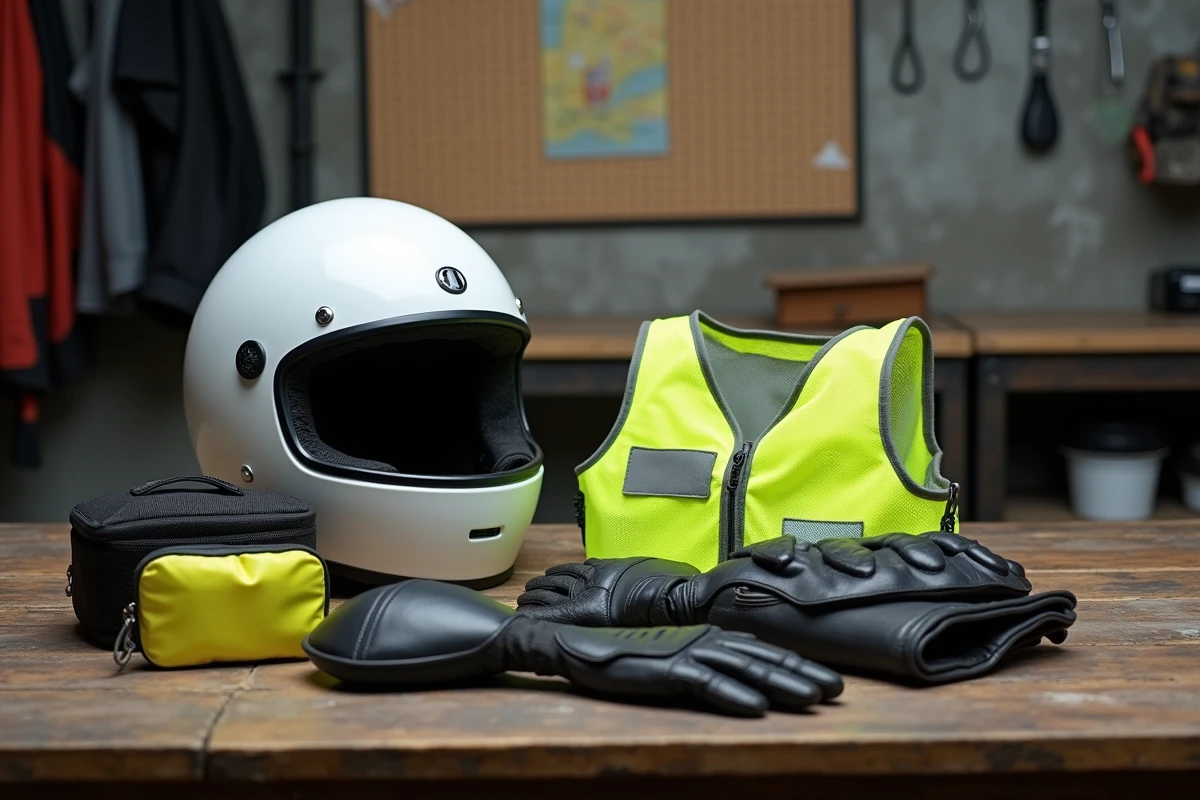
Gloves, closed shoes, and body protection: what EU regulations require starting in 2026
In France, CE-certified gloves have been mandatory for several years. In Spain, the situation is evolving as part of European harmonization. Starting in 2026, member states must integrate the requirement to wear at least a secured helmet, protective gloves, and closed shoes for motorcycle and moped riders.
Spain, through the DGT, must transpose these requirements into the Reglamento General de Circulación. For us, motorcyclists in transit or on vacation, this means we can no longer rely on the legal gray area that previously existed regarding gloves and shoes.
What to carry at a minimum in the saddlebags
- CE-certified gloves, even lightweight ones in summer (there are ventilated models suitable for the Andalusian heat, with knuckle protection)
- Closed shoes covering the ankle, ideally short boots with ankle reinforcement, no low-top sneakers or sandals
- A jacket or vest with back, elbow, and shoulder protection, even if Spanish law does not yet formally require it: in case of an accident, the absence of upper body protection weighs on the report and compensation
Reports vary on the tolerance of checks regarding shoes, but the trend is clear: the DGT is gradually aligning its requirements with the European framework.
Headlights on and vehicle equipment: common oversights
We often think about the gear we wear, less about what the motorcycle itself must carry. In Spain, headlights must be on at all times, day and night. Most recent motorcycles do this automatically, but on an older machine, make sure the switch is properly positioned before crossing the border.
On the vehicle side, Spain also requires a spare bulb set (unless the motorcycle is equipped with LED or xenon, in which case the obligation does not apply). Two warning triangles were required until recently, but Spanish regulations are evolving on this point for cars, with a gradual replacement by the V-16 light. For motorcycles, the situation remains simpler: a high-visibility vest that is quickly accessible is sufficient in addition to the triangle or distress light.
Safety vest: accessible, not worn
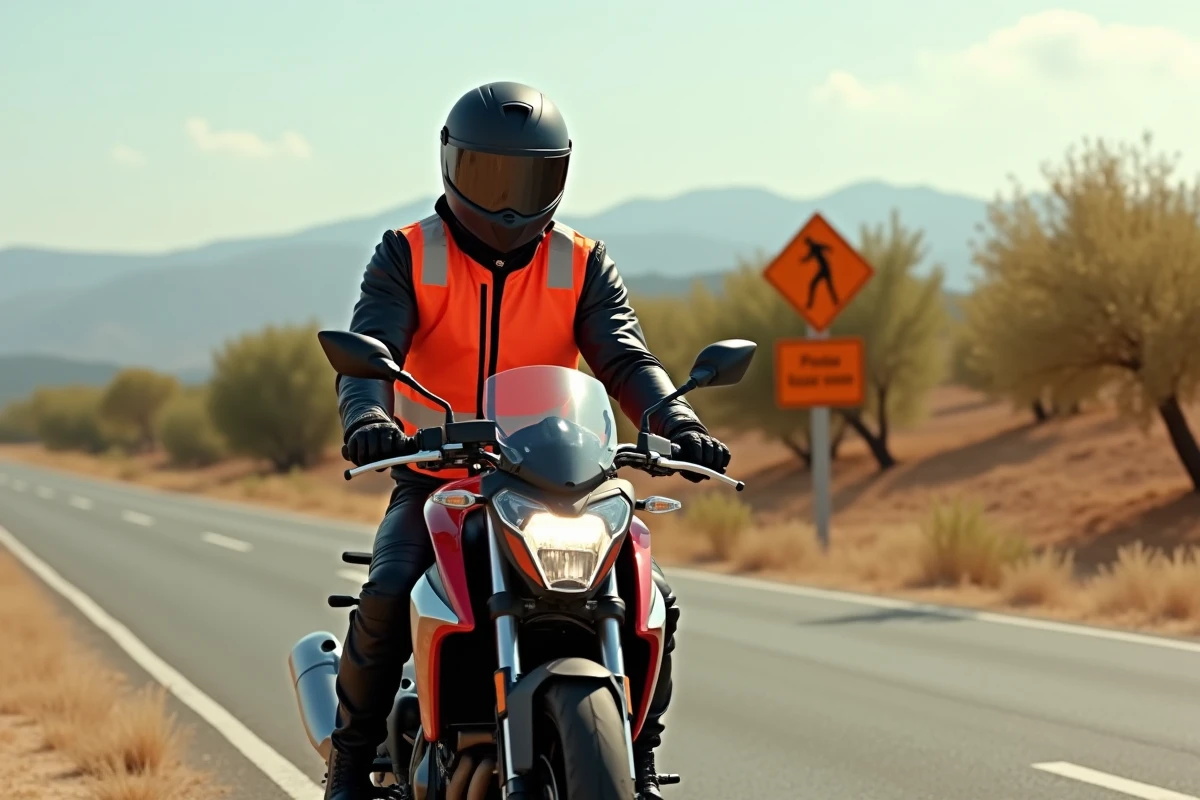
The reflective vest is not to be worn while riding. It must be within reach to be put on in case of an emergency stop on the roadside. Store it in the top case or under the seat, not at the bottom of a side bag under the camping tent.
Fines and DGT checks: what you really risk on-site
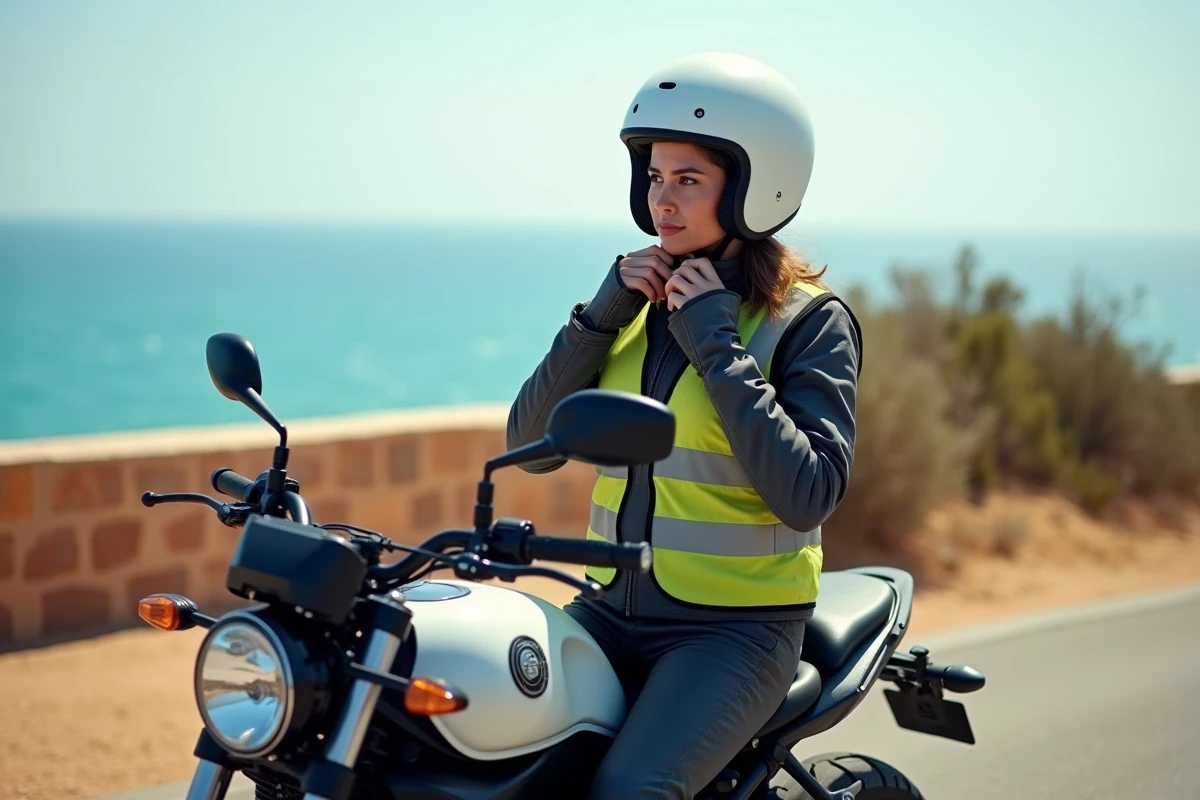
The DGT does not joke around with motorcycle safety gear, especially in the tourist areas of the Costa Brava, Costa del Sol, and the Balearic Islands. Checks primarily target helmet use, its approval, and increasingly, the presence of gloves.
A fine for not wearing a helmet in Spain represents a significant penalty, sometimes accompanied by vehicle immobilization. The absence of a reflective vest during an emergency stop also exposes one to a fine.
For a foreign driver, payment is often made on-site or via a ticket sent to the country of origin. Contesting a Spanish fine from France remains a lengthy and rarely fruitful process.
Checklist before crossing the border
- Full-face or modular helmet approved ECE 22.06, for the rider and the passenger
- CE-certified gloves worn while riding
- Closed shoes covering the ankle
- Reflective vest accessible without getting off the motorcycle
- Headlights checked and on
- Spare bulb set (if halogen lighting)
Motorcycle regulations in Spain are tightening every year, driven by European directives and the DGT’s desire to reduce motorcycle accidents. Preparing your gear before departure avoids an unpleasant surprise at the first toll after Figueras or at the entry roundabout in Bilbao. You save time, money, and, incidentally, protect your skin.