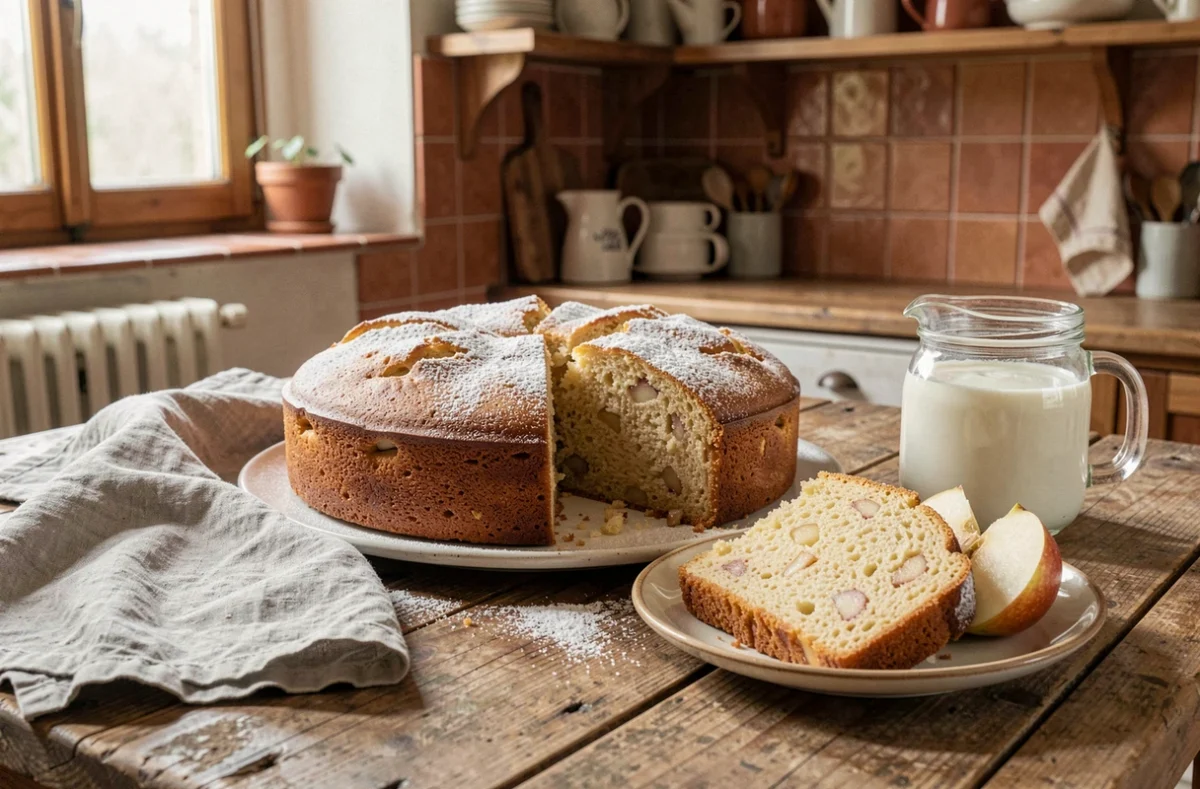
Apple yogurt cake is based on a simple measuring principle: the yogurt pot replaces the scales. This approach eliminates weighing and produces a smooth batter with a fixed ratio of fat, flour and leavening agent. Adding apples to the batter changes the cake’s moisture balance, so a few precise adjustments are needed to keep it soft without making it too wet.
Juicy or ripe apples: adjust the batter without making it soggy
A very ripe or juice-filled apple releases water as it bakes. This moisture seeps into the batter and can turn an airy cake into a dense, soggy one. The problem is most common with softer varieties, which release more liquid than firm apples.
To compensate, the shape of the pieces can make all the difference to the texture. Diced into pieces about one centimetre across and folded straight into the batter, apples create pockets of fruit without making the whole cake soggy. Thin slices arranged on top soften on the surface without adding moisture to the centre. Using both—diced apple in the batter and slices on top—gives you a cake that is both tender and well structured.
Another useful tip is to pat the apple pieces dry with a clean cloth before mixing them into the batter. This removes excess juice without affecting the flavour. If the apples are particularly soft, adding an extra tablespoon of flour to the usual amount will absorb excess moisture as the cake bakes.
The recipe for Cyril Lignac-style apple yogurt cake explains this family-friendly base recipe, measured with a yogurt pot and easy to adapt with these adjustments.
Choosing the right apple variety for yogurt cake
Not all apples behave the same way in cake batter. The variety you choose affects both the final texture and the balance of sweet and tart flavours.
- Soft varieties (such as Golden Delicious) soften quickly as they bake and blend into the batter. They’re ideal for a very moist, almost applesauce-like result, but add more moisture.
- Tart, firm varieties (such as Granny Smith) hold their shape and provide a clear contrast with the sweetness of the batter. They stand up better to the heat and reduce the risk of a soggy cake.
- Combining a sweet variety with a tart one in the same cake creates a depth of flavour that neither can provide on its own. Half soft, half crisp, the result offers two distinct textures.
Choose your apples according to the result you want. For a yogurt cake that rises well and holds its shape, firm apples are easier to work with. For a deliberately soft, tender result, sweet varieties work well, provided you follow the flour and drying adjustments described above.
Yogurt-pot recipe: ingredients and method
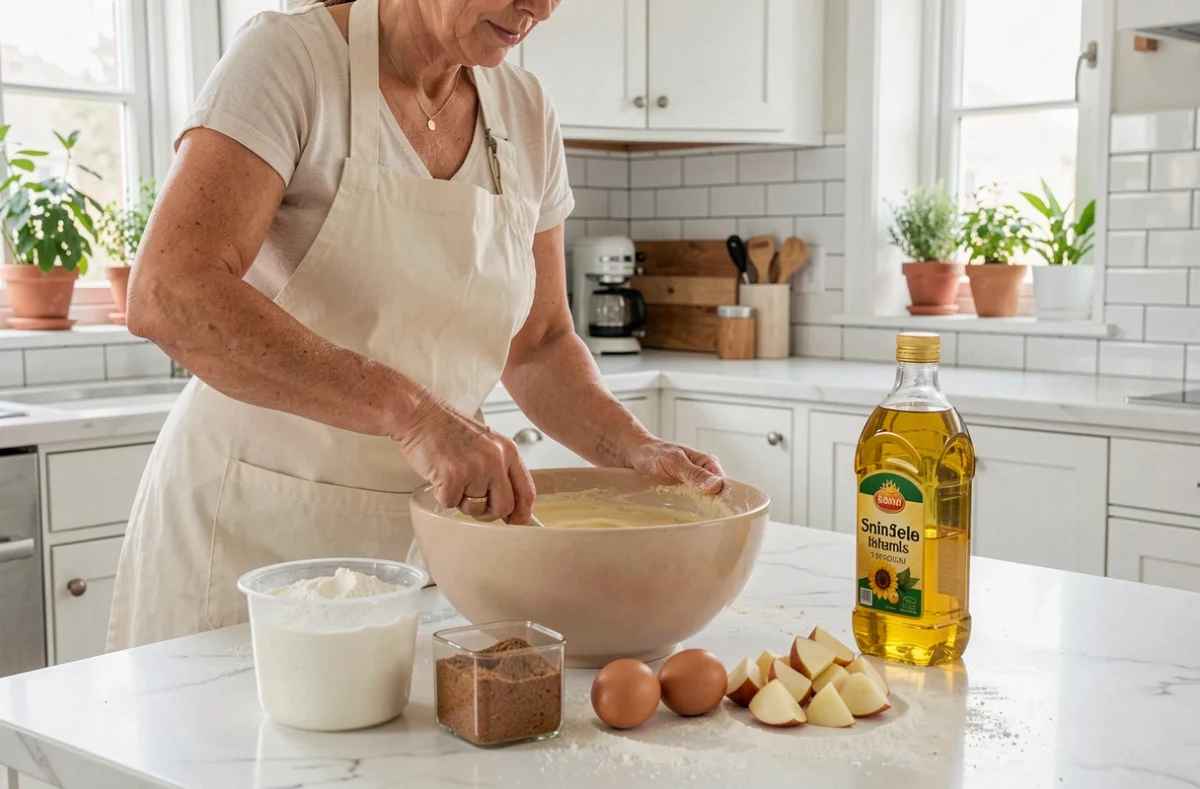
The yogurt-pot measuring system uses a standard pot of about 125 g. Each dry or liquid ingredient is measured in potfuls, making the recipe easy to repeat without scales.
Basic ingredients
- One pot of plain yogurt (use the empty pot as your measuring cup)
- Two pots of granulated sugar
- Three pots of flour
- Half a pot of neutral oil (sunflower or rapeseed)
- Three eggs
- One sachet of baking powder
- Two to three apples, depending on their size
Method
Pour the yogurt into a mixing bowl, add the sugar and stir. Add the eggs one at a time, mixing between each addition. Sift in the flour and baking powder, then add the oil. The batter should be smooth and thick, with no lumps.
Peel the apples, then dice some for the batter and slice the rest for the top. Fold the diced apple into the batter, pour it into a greased and floured cake tin, then arrange the slices in a fan pattern on top. A light sprinkling of sugar over the slices will caramelise as the cake bakes.
Baking apple cake: tin, timing and doneness
The size of the tin makes a difference. A thicker layer of batter in a narrow tin won’t bake the same way as a thinner layer in a wider one. In a small-diameter tin, the centre takes longer to cook while the edges are already done. A wider tin spreads the batter into a thinner layer and speeds up baking.
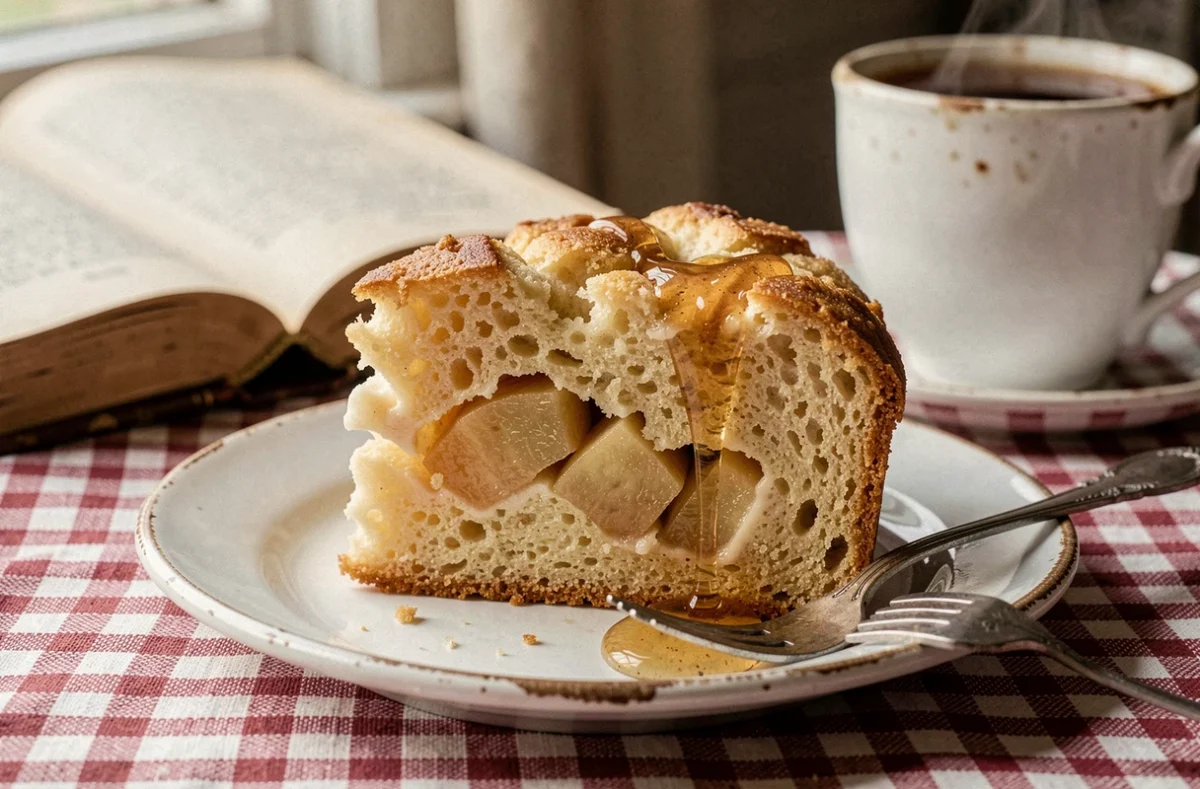
Baking times vary from one source to another, and none can replace a visual check. The most reliable test is to insert a knife or wooden skewer into the centre of the cake. If it comes out clean, with no raw batter on it, the cake is ready. If it comes out slightly damp, bake for a few more minutes at a time.
A preheated oven is essential, not optional. Putting the cake into a cold oven affects how it rises and can lead to uneven results. Baking powder reacts to heat as soon as it is exposed to it, and this reaction needs to take place in an already hot oven for the cake to rise evenly.
Recipe attribution: Cyril Lignac-style or the chef’s own recipe?
The phrase “Cyril Lignac-style” needs some clarification. Online results often mix up apple yogurt cake and moist apple cake, without always establishing whether the recipe was published or made by the chef himself. Several versions with different measurements circulate under his name.
The wording “style” indicates an adaptation inspired by the chef, not necessarily a recipe he created or endorsed. Distinguishing an authenticated recipe from a free adaptation helps avoid misunderstandings. The basic idea remains the same: a simple yogurt-based batter, apples and a soft, family-friendly cake.
This ambiguity doesn’t detract from the recipe’s quality. The yogurt-pot measurements, simple ingredients and addition of apples make for a well-balanced cake that works, regardless of who created the exact version. Apple yogurt cake remains a French family-cooking classic, and all its variations, whether officially attributed or not, revolve around the same balance of softness, fruit and ease of preparation.