In France, the majority of mobile homes leave camping sites at the end of the high season, due to a lack of effective solutions to face winter temperatures. However, some manufacturers now offer structures ready to withstand significant climate variations, provided that some technical adaptations are made.
In the face of winter, the mobile home quickly shows its limits. Thermal regulations do not apply to this type of housing, which results in a wide variety of insulation levels on the market. The result: indoor comfort can quickly turn into a daily challenge, and energy consumption skyrockets, much more than in a traditional home.
What challenges does winter pose for comfort in a mobile home?
When temperatures drop, the mobile home reveals its flaws. Due to its lightweight nature, insulation remains basic and heat escapes through all possible outlets. Thin walls, suspended floors, single glazing: all elements that promote heat loss.
As the cold days go by, thermal comfort weakens. Humidity makes its way in, settling in corners, under beds, or behind furniture. Thermal bridges multiply cold spots, condensation builds up, especially in the bedrooms. Thus, living in a mobile home becomes a balancing act: one must fight against both the ambient chill and the appearance of mold.
Regulations impose nothing here: the RE 2020 remains outside the scope for mobile homes, which creates a marked gap between models on the market. A few manufacturers focus on “season” versions, better insulated, but most owners must cope with heterogeneous performance. Electric heating, often chosen by default, drives up the bill without necessarily improving the ambiance.
Humidity, due to a lack of effective ventilation, settles in quickly. Mold, persistent odors, saturated air: these inconveniences are not a fatality. Insulating a mobile home for winter becomes essential for anyone wanting to enjoy their property year-round, in a healthy and pleasant space.
Effective insulation solutions to face the cold
To enhance the insulation of a mobile home, it is better to target each vulnerable area. Walls, roof, floor: this is where heat makes its escape. Several materials are suitable for the lightweight structure of these homes.
Here are the main options to consider for effectively insulating each part of the mobile home:
- Walls and ceilings: Glass wool or rock wool provide good thermal protection and integrate easily into existing walls. To gain in thickness, expanded or extruded polystyrene proves effective and lightweight.
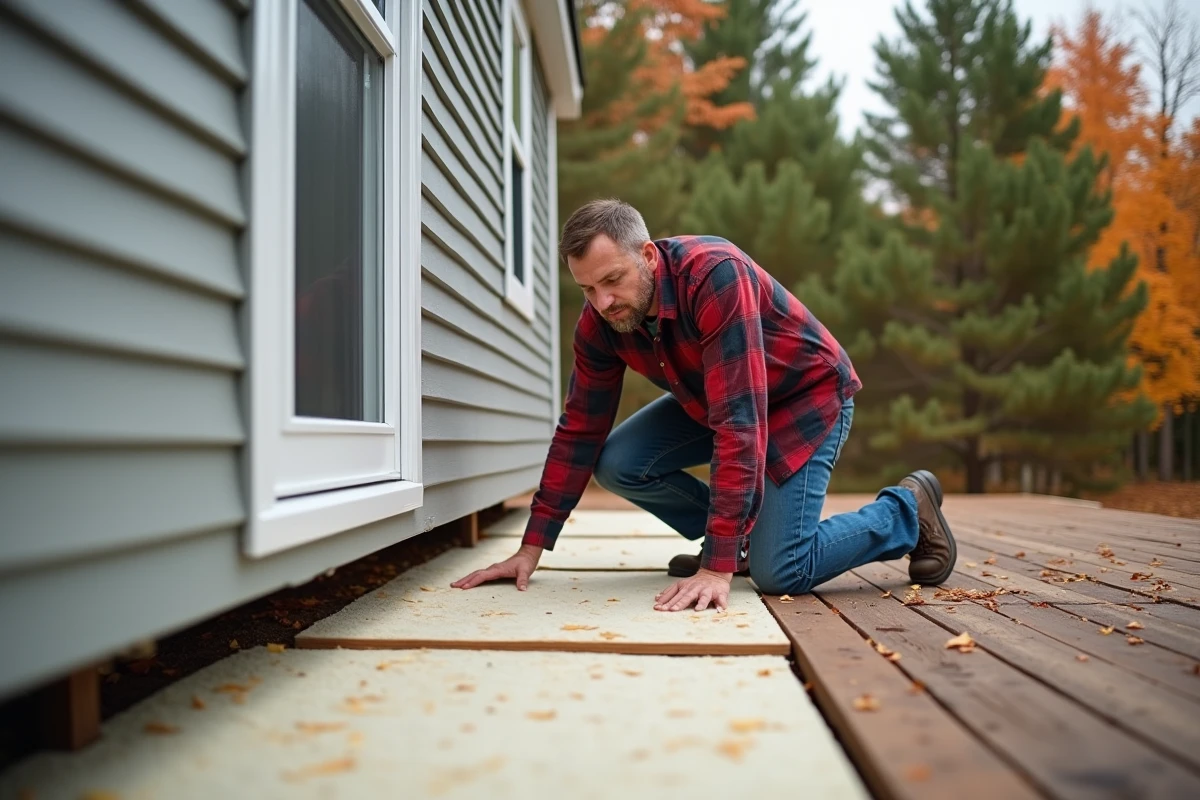
- Floor: Installing polyurethane foam under the floor limits the cold sensation at ground level. A sprayed expanding foam can also fill in the smallest gaps, thus limiting drafts.
Glazing also makes a difference. Single-glazed windows do not retain heat. Replacing these with double glazing limits heat loss and the formation of condensation on the panes.
On the heating side, it is important to select a system suited to the size and configuration of the mobile home. A compact pellet stove or a low-consumption electric convector allows for better temperature control. The idea is to retain every watt produced, without waste.
For custom insulation, prioritize certified materials suited to the lightweight construction. Well-thought-out insulation truly transforms life in a mobile home, even when the thermometer shows negative values.

Maintaining and improving your mobile home for year-round well-being
Living in a mobile home year-round requires regular attention. Maintenance does not stop at a quick glance at the seals or a spring cleaning. It involves monitoring sensitive points: roofing, skirting, cladding. The slightest water infiltration can quickly degrade insulation and promote humidity.
Also think about adapting the interior space. To enhance comfort, invest in thick curtains, rugs designed to insulate from the cold, or even lined panels. These simple additions protect against temperature variations and improve daily well-being.
Thermal renovation deserves careful selection of materials compatible with the lightweight structure of the mobile home. Installing exterior cladding can enhance protection against the cold, while a veranda or covered terrace increases living space without skyrocketing energy consumption.
Ventilation remains a priority. Regularly renewed air limits condensation and preserves the durability of equipment. Opt for adjustable ventilation grills and ensure that openings remain functional. It is the combination of good insulation, appropriate heating, and controlled ventilation that allows the mobile home to remain welcoming, regardless of the season.
Finally, to personalize and enhance comfort, do not hesitate to rethink the decor and furniture. Paintings, low-consumption lighting, and clever storage optimize space without neglecting thermal performance. A mobile home where it is good to live is a series of thoughtful small gestures, a succession of targeted improvements. Ultimately, it promises serene winter days, without compromising on quality of life.