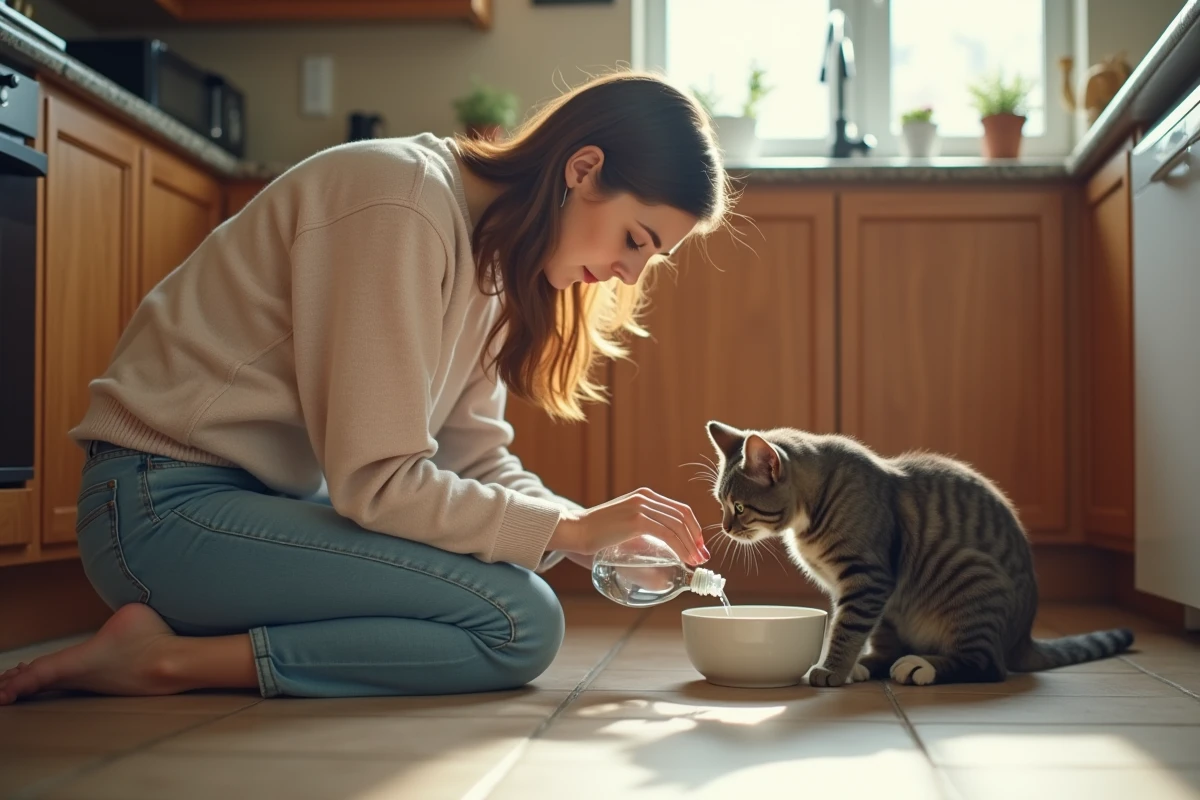
A cat will never read the composition of water on a bottle. Yet, the health of these felines often depends on the choices made by their owners, who are frequently exposed to waters that were never designed for them.
What criteria to choose the best water for your cat?
Regardless of a brand’s prestige or the promises displayed in large letters on the bottle, what makes all the difference are the small numbers relegated to the bottom of the label. If the dry residue exceeds 100 mg/l, the cat’s kidneys raise the alarm: the filtration work becomes burdensome, and gradually, the overload sets in. The more minerals the water contains, the greater the risks: urinary disorders may follow, sometimes chronically.
Too much calcium, magnesium, or sodium brings nothing good. We think we are acting for the best, but being blind to certain invisible residues, pesticides, TFA, PFAS, means missing the real problem. These substances accumulate slowly, and it is the cat’s body that ultimately suffers the consequences.
Tap water, on the other hand, varies greatly depending on the region: aging pipes, variable chlorine levels, the situation differs from one city to another. Many worry about the composition of their tap water, opting instead for bottled water or a filtered pitcher. But the same question keeps coming back: can we give Evian water to cats? To truly answer, we need to analyze what it contains.
Evian water: what does it contain and what impact does it have on your cat?
Evian often evokes purity and mountains. However, the technical sheet is surprising once we focus on the numbers: 345 mg/l of dry residue, 80 mg/l of calcium, 26 mg/l of magnesium, and 6.5 mg/l of sodium. For feline metabolism, these figures are anything but trivial. From 10 mg/l of magnesium, the risk of urinary crystals skyrockets, especially if the cat drinks little or primarily eats kibble.
The high calcium level worsens the situation: this is a well-documented factor for the formation of urinary stones. The result: unexpected veterinary consultations, acute pain, sometimes emergency surgery. The shift into difficulty can occur quickly after a simple change in drinking routine. No visible signal in the short term, but over time, the consequences inevitably appear.
| Component | Content (mg/l) | Potential impact on the cat |
|---|---|---|
| Dry residue | 345 | Excessive strain: kidney overload |
| Calcium | 80 | Increased risk of urinary stones |
| Magnesium | 26 | Promotes the appearance of urinary crystals, increases the risk of disorders |
| Sodium | 6.5 | Calls for caution, especially with a dry diet |
Veterinarians are categorical: low-mineral water, poor in calcium and magnesium, remains the safest choice for the cat’s vitality and its kidneys. It is the only way to avoid this insidious overload that always ends up catching up with the animal.
What alternatives to prioritize for cat water?
There are several options, but each has its strengths and limitations. Tap water, standard bottles, or filtered pitchers: the choice varies depending on the region, the quality of the pipes, and the home environment.
While a filtered pitcher can remove some pollutants, it only modestly reduces the mineral load, which is not always sufficient for a fragile cat. That’s why many veterinarians recommend very low-mineral spring waters, such as Mont Roucous. With a dry residue of less than 50 mg/l, virtually devoid of calcium and magnesium, this type of water is gradually gaining the trust of attentive owners, especially to prevent urinary problems. Another tip: change the water daily, favor always fresh water, and maintain consistency in brand choice. These actions make a difference and keep the cat’s kidneys healthy, year after year.
To better compare, here are the options favored by informed owners:
- Tap water: mineral and chlorine content varies, quality heavily depends on the city or village.
- Filtered water: some pollutants are removed, but mineralization depends on the chosen filter.
- Very low-mineral spring water: recommended for cats that eat kibble or are prone to urinary disorders, it is also the option often recommended by veterinarians.
Ultimately, every pour of water into the bowl hides a silent issue: that of the cat’s longevity, vitality, and the peace of mind regained over time. A discreet gesture, but one that weighs heavily on the quality of life of our four-legged companions.