
Organizing a wedding this year means dealing with rising vendor costs and increasingly frequent weather uncertainties. These two realities change the way weddings are planned, far beyond just choosing the dress or the reception venue. Some concrete decisions made early on can make the difference between a serene day and weeks of unnecessary stress.
Wedding budget allocation: catering as an adjustable variable
Most wedding planning guides list budget items without explaining which one absorbs the overruns. Catering often accounts for between 20 and 40% of the total budget, and this share has been increasing in recent years due to rising raw material and energy costs.
In practical terms, this is the area where couples have the most flexibility. Reducing the guest list by ten people has a direct and measurable impact on the catering quote, whereas negotiating the photographer’s fee only saves a fraction of the total.
Are you torn between a cocktail dinner and a seated meal? The cocktail format allows for more guests to be served for a comparable amount to a traditional meal, provided you limit the number of hot dishes on the menu. This is a concrete lever that few couples explore from the start, often because they begin by choosing the venue before calibrating the food budget.
Those who wish to plan their wedding with Cœur de Mariage will find a useful framework to structure these financial decisions ahead of the first quotes.

Outdoor secular ceremony: anticipate the weather rather than endure it
The outdoor secular ceremony appeals to a majority of couples. The repeated heatwaves in recent seasons have changed the game for summer weddings.
Having a climate contingency plan is no longer an option; it is a prerequisite. When visiting the reception venue, check for the existence of a covered or shaded area that can accommodate all your guests. Some venues charge an additional fee for setting up a backup structure: ask for the rate during the first meeting to avoid an unpleasant surprise in the final quote.
Wedding planners report that ceremony times are increasingly shifting towards late afternoon, after 5 PM, to escape the heat peaks. This simple adjustment alters the entire timeline of the day: evening cocktail, later dinner, nighttime entertainment.
Adjusting the schedule to the season
For a wedding between June and September, build the schedule backward from sunset. This ensures soft lighting for the ceremony photos and spares guests from waiting in the blazing sun.
- Ask the photographer for the ideal time for couple portraits in natural light, then schedule the ceremony accordingly.
- Provide fans, misters, or individual umbrellas for guests if the ceremony remains outdoors.
- Inform the caterer of the adjusted timing: a service delayed by an hour changes the kitchen logistics, so it’s best to signal this early.
Eco-friendly choices and cost control: the same decision-making
“Green” initiatives in wedding planning are not just about ecological posturing. Renting decor instead of buying it, sending invitations in digital format, offering a predominantly vegetarian menu: each of these choices reduces the bill as much as it limits the environmental footprint.
Well-thought-out eco-responsibility is the best ally of a tight budget. Several wedding planners find that couples who adopt these practices spend significantly less without compromising the quality perceived by guests.
Three concrete decisions to validate early in the preparations
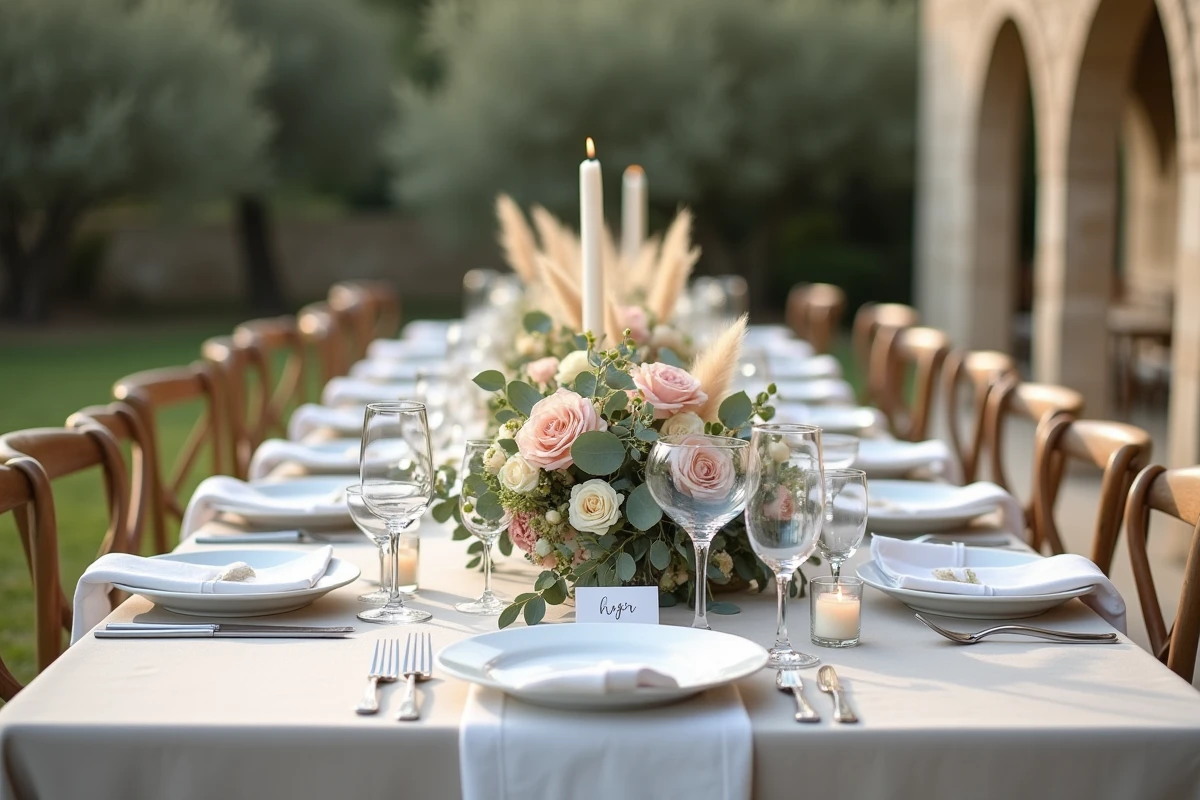
- Renting vintage or mismatched tableware instead of buying “premium” disposable tableware: the visual result is often superior, and the expense is comparable or even lower.
- Voluntarily limiting the number of guests: beyond the budget aspect, a smaller list simplifies the seating plan, reduces logistical needs, and allows for more time to be dedicated to each guest on the day of the ceremony.
- Local and seasonal flowers: they cost less than imported varieties, withstand summer heat better, and their supply is more reliable for the florist.
Vendor coordination: the timeline as a safety net
A poorly adjusted timeline remains one of the primary causes of tension in preparations. The issue is not the absence of a task list, but the lack of margins between each deadline.
Each service should be confirmed at least two weeks before the date scheduled in the initial timeline. This buffer absorbs delivery delays, last-minute changes, and administrative surprises (documents for the town hall, for example).
Regarding vendors, a common mistake is to book the venue first and then look for a compatible caterer. Some venues impose their own caterer or limit the choice to an approved list. Check this point before signing, or you may have to forgo the menu you envisioned.
Centralize communications to reduce mental load
Consolidate all contracts, quotes, and communications in a single shared space between the two future spouses. A simple online folder, accessible from a phone, is sufficient. The scattering of information across email, messaging apps, and paper notebooks generates more stress than the actual complexity of the event.
A well-organized wedding does not require controlling everything. It relies on a few decisions made at the right time, a budget calibrated on the most significant expense, and the ability to delegate what can be delegated. The rest is taken care of by the joy of the day itself.